Tharassian, the Plane Fluctuant
The world of Tharassian is my longest-running creative project, spanning well over half my life at this point. Originally birthed as a fantasy novel currently on its third rewrite, it has branched out into a multimedia project spanning video game projects, several D&D campaigns, and — most importantly — a massive Hearts of Iron IV mod that is the bedrock of my programming and game design skillset.

A Love Letter to Fantasy
Coming from a family of massive fantasy nerds, it is unsurprising that I would fall in love with the genre from a very young age. One of my fondest childhood memories is my father sitting me down at the kitchen table at around the age of seven for a (simplified) game of Advanced Dungeons & Dragons 2nd Edition, which my entire family on my dad’s side also plays every year when we gather together to celebrate Christmas and New Years’ Eve. Hells, I learnt English by having those AD&D books on one side and an English-Dutch dictionary on the other, and just reading the Player’s Handbook, Dungeon Master’s Guide and Monster Manuals cover to cover repeatedly! Between that, the regular trips to fantasy fairs, the occasional Lord of the Rings marathon and devouring practically every fantasy novel I could get my hands on, wondrous tales of magic, elves and dragons have occupied my mind for most of my life.
Very quickly, merely experiencing the stories of others was no longer enough. I’ve always had my own tales to weave, and Tharassian is my biggest project in that vein to date. Drawing primarily from my deep and abiding passion for the world of Warhammer Fantasy and the homebrew tales my family would spin at the tabletop, with secondary influences from works such as Thief, the Mistborn series, and Anbennar, the worldbuilding of Tharassian centers on grand political narratives built on top of a deep historical context. As a fanatic lover of geopolitics with a Master’s degree in International Relations & Diplomacy, I have greatly enjoyed thinking through the implications of grand-scale actions in the world: what could drive the Elves of Ordoria to their supremacist fanaticism? Why is the Ageless Queen reviled, even if necromancy isn’t inherently a force of objective evil? Why are the Kurgur Orcs organized into roving warbands of wolf-riding raiders, if their homeland is perhaps the pinnacle of intellectual refinement in the entire world? Each of theses questions have intricate answers, informed by the histories of the peoples involved, and the institutions they have built.
For all the apocalyptic background, though, Tharassian at its core is simply a love letter to the vaguely faux-European medieval fantasy that has defined most of my childhood. The design goal when I started to build this world was explicitly to build a ‘generic’ fantasy setting — the Dwarves dig greedily and deep, the Orcs raid the lands of the more settled species, and the Elves have lived in their forests for millenia — and to then make it interesting through letting these bland archetypes grow and develop throughout their history, interacting with each other and producing new, unique cultures, stories and conflicts through that civilizational arc.
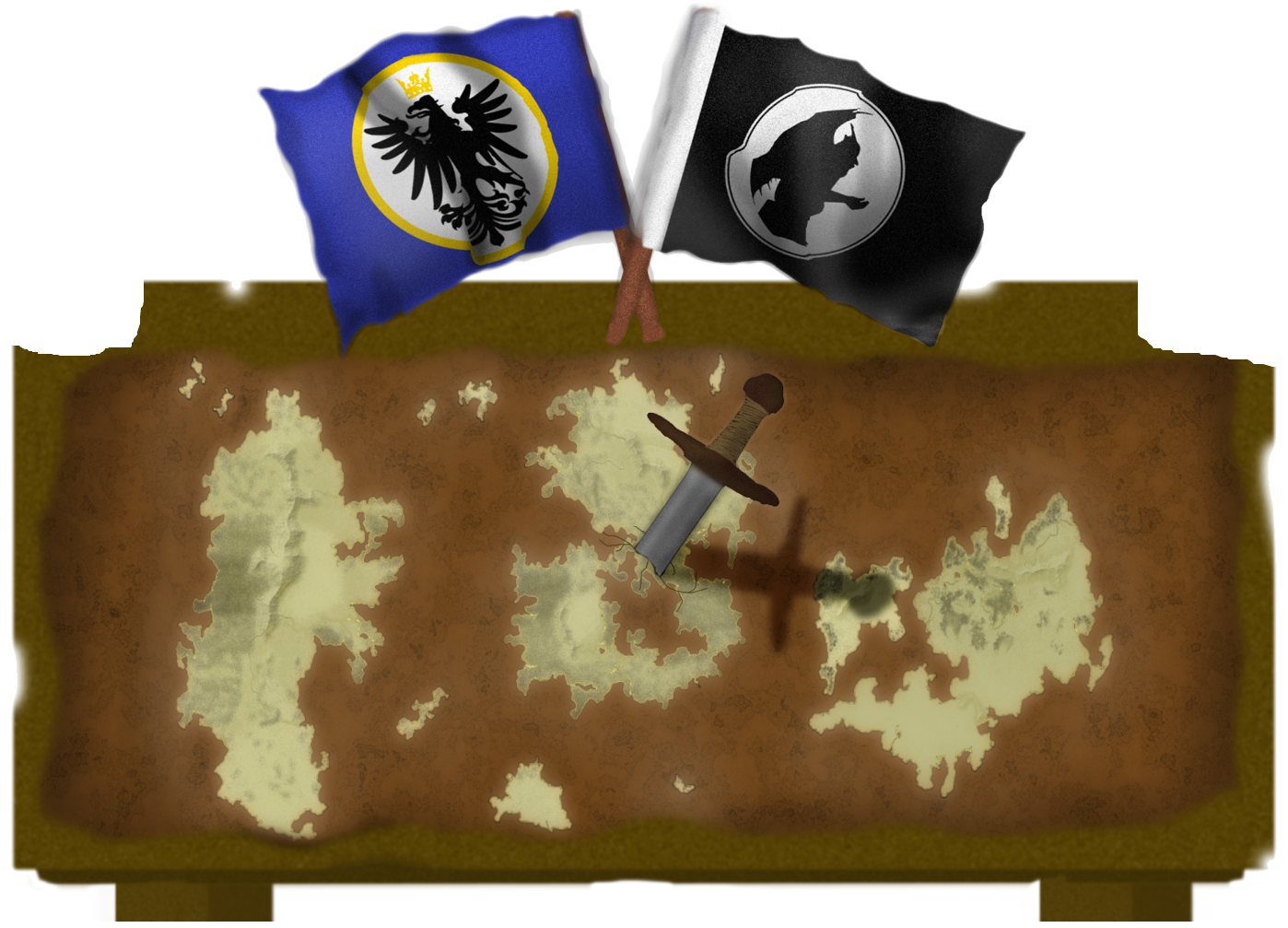
And these histories have been turbulent indeed. One of the core defining features of Tharassian, and why it is called the ‘Plane Fluctuant,’ is that it is both a low-fantasy and a high-fantasy setting, depending on when in its history you look. Far off into the frigid southern oceans, on a barely-inhabited island well out of the way of any trade routes, stands the Gate of the Gods. It almost always is shut firmly, unable to be opened by any mortal means — and it is good that it is so, for in those rare moments where the Gate swings open, the results are apocalyptic indeed. Should the world find itself in a period of bounteous arcane power, the Gate pulls all the magic in the world back in, rendering wizards little more than scholars of an art now lost, leaving all but the most powerful magical artifacts inert, and sending the magical creatures of the world into a centuries-long torpor. Should the Gate open during such a time of low magic, it will instead flood the world with sorcerous might: the dead will rest ill in their graves, Demons will claw and tear at the veils of reality, and peasants and nobles alike will find themselves suddenly flush with power they neither understand nor control. No matter what happens, the opening of the Gate is a calamity even beyond its implications for magic: the shockwaves of such a radical shift in the foundational makeup of the Plane Fluctuant causes the earth to crack and tear, mountains to rise, and continents to sink beneath the waves as the world rips itself to pieces in its attempt to adjust to its new reality.
Mysteriously, though, the most recent time the Gate has opened has not nearly been so dramatic: instead of a single, devastating opening that reconfigures the world in a matter of years, magic has slowly been seeping back into Tharassian over the course of centuries. Few are aware of the changing nature of the world, beyond vague mythology barely remembered, and fewer still know of the Gate of the Gods, for so much knowledge is lost in the aftermath of its every opening. Those rare scholars and sages that have studied the Gate, however, are deeply divided on the reasoning behind this unusual transition between the two phases of the Plane Fluctuant. Is this a sign that the Gate has calmed down, and the world is approaching a stable equilibrium phase at last, or is this a sign of something worrying? A few, condemned as madmen by their peers, whisper that this may even be the last dying breath of the Gods themselves, and that we now find ourselves in the final days of the world…
First, as a Story
The first iterations of Tharassian came in one of the most accessible mediums of artistic creativity: writing! I’ve been writing from a fairly young age, with some of my earliest published work — dating from 2012 — still being available online today (though, please don’t go digging up my old FanFiction.net account…)
In that same year, I would begin working on the fantasy story I’d had vague ideas for in my head for a good while by that point, and Irenthar: City of Hate would begin to take shape! The first draft of the story was about 10,000 words long and, well… written by a thirteen-year old, so it wasn’t exactly Shakespearean prose, but hey — it was a finished story!
From there, Irenthar languished in the recesses of the family computer, gathering digital dust. It wasn’t until a family holiday to Austria where the urge to rewrite it came over me, four years later. I wrote 10,000 words in the span of four days on the battered old laptop we’d brought with — the length of the entire first draft, now only covering the prologue and the first chapter. I’ve chipped away at it over the years, writing off and on when the mood takes me. Currently, the work is just under half-finished, sitting pretty at about 46,000 words. I fully intend to finish it, one day, and have recently completely rewritten the prologue, which is currently publicly available on my AO3!
Why City of Hate? It was revealed unto me in a dream. No, seriously, we were on vacation in Germany and I woke up with the subtitles City of Hate, Tower of Hope, and Temple of Despair burnt into my brain. I knew I had to use them for something, and that something became Irenthar! Look forward to a trilogy eventually, I suppose — can’t let those other two titles go to waste!
Incidentally, this is also where my journey into cartography began — the first drafts of the continents of Tharassian, wildly different from the map you can see at the top of the page, were drawn in fineliner on paper! To this day, I have a habit of sketching random world maps if I’m doodling in the margins of my notebook.
You can find more information on the story of Irenthar: City of Hate here.
Then, on the Tabletop
Naturally, growing up on TTRPG’s coupled with my love of storytelling meant I soon found myself running my own campaigns. I don’t remember a single time where my family ran an official module, and I’ve continued that strong homebrewing tradition by developing my own adventures for my friends to enjoy. Having already started work on Tharassian, it was a logical setting to use, and for the entirety of my teens, I ran a nearly-uninterrupted campaign set in it. This helped me flesh out a different part of the world: for the novel, I’d focused on the Grand Master’s Realm, in the far North-West of the world, and I deliberately set my campaign in the Union of Free Ungerdaler Princes, all the way on the other side of the continent. This helped me slowly develop the world on a far more granular level, creating specific locations such as the village of Kreishelm and detailing the movers and shakers of the city of Nochwald, where the party was headquartered. Their quests and journeys took them all across the Union and through the lands of the seafaring Dwarves of the Bergialer Confederation and the nomadic servants of the Slaying Word in the Kurgur Hunting Grounds. Other, shorter-lived campaigns found themselves in locations such as bustling Irinthios or back in the Grand Master’s Realm, and these, too, provided valuable ideas for further worldbuilding and storytelling.
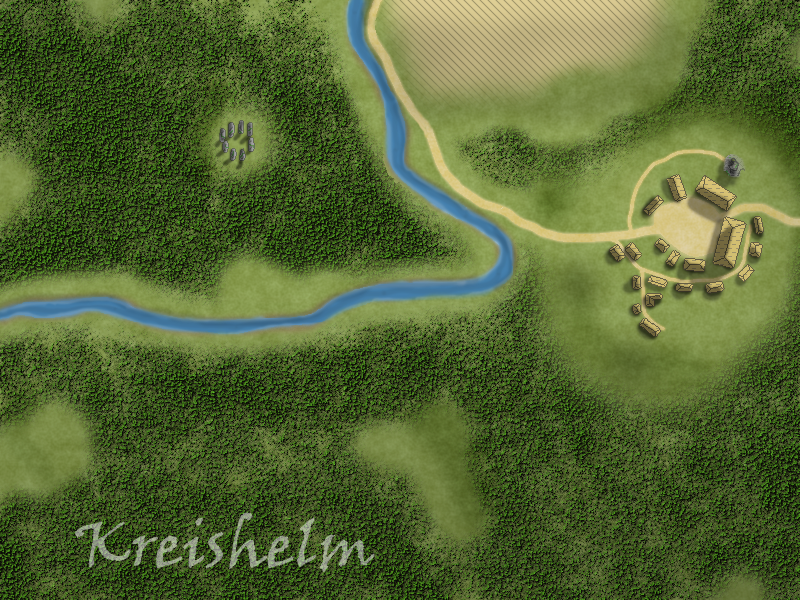
I won’t spend too much time detailing this part of Tharassian’s development, as it has left little in the way of showcasable work. The tabletop has, however, provided endless fuel and inspiration that have worked their way into the last and greatest of the Tharassian-related projects that have seen the light of day thus far: the Hearts of Iron IV mod.
Now, in a Video Game
I have always enjoyed video games as an interactive form of storytelling, and this ultimately resulted in me wanting to bring my own stories to life through the computer screen. After a few false starts, I found my way into the wonderful world of game design through Hearts of Iron IV, a World War II grand strategy game by Paradox Interactive. In HOI4, the player takes control of any country on the map in either 1936 and 1939, and has to lead it through one of the bloodiest conflicts in human history, managing its politics, economy, diplomacy and military campaigns, all at the same time.
Paradox’s grand strategy games are famous timesinks, and I had played HOI4 for hundreds of hours before I seriously considered the idea of modding it. However, I had wanted to turn the world of Tharassian into a grand strategy mod for quite some time, having been a massive fan of some of Paradox’s other titles, such as Crusader Kings II and Europa Universalis IV. In terms of the setting, either of those games would have been a far better fit than Hearts of Iron, as the world of Tharassian is set in a broad late medieval-early Renaissance period. HOI4, however, had a new feature that made it uniquely suited to
Link to Dreg’s OST!!